Case Study · AI SaaS Product Engineering
How TechEniac Engineered a Smart Link and AI Verification Platform for 10,000+ Creators with 99.9% Uptime on AWS Kubernetes.

Project Snapshot
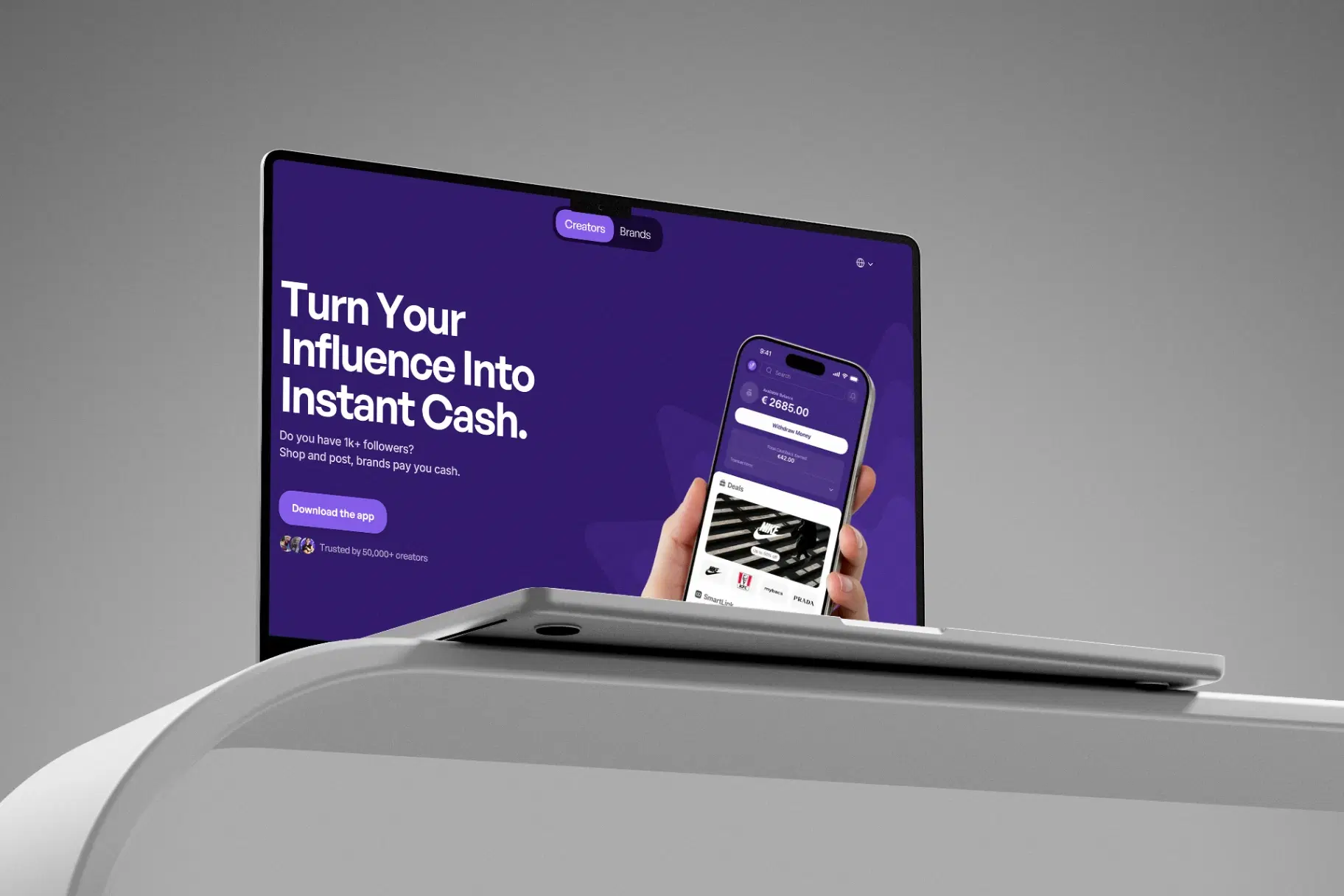
The creator economy has a hidden infrastructure problem. When creators share links across Instagram, TikTok, YouTube, and other platforms, up to 40% of potential engagement is lost because links open in restrictive in-app browsers rather than native applications. Users encounter degraded experiences, abandon the flow, and creators and brands lose significant revenue they never even knew was leaking.
The founder had quantified this problem and arrived at TechEniac with a clear product vision, established brand identity, and an aggressive go-to-market timeline pre-launch marketing was already underway. The original feature set, however, was overcomplicated. Multiple feature branches, nice-to-have integrations, and secondary workflows were bundled into the V1 scope.
TechEniac needed to do three things simultaneously: simplify the product scope to what actually drives creator adoption, engineer the technically complex smart link detection logic with AI-powered content verification, and deploy a platform capable of handling 10,000+ concurrent creators from Day 1 with zero room for downtime.
Before writing a single line of code, TechEniac conducted a focused product discovery exercise with the founder. The goal was to separate what matters from what can wait.
The original scope included 15+ features across creator tools, brand dashboards, analytics modules, and social integrations. TechEniac challenged the scope and reduced V1 to three core capabilities:
This product thinking knowing what NOT to build proved to be as valuable as the technical execution itself. Everything else was documented, prioritised, and deferred to post-launch iterations.
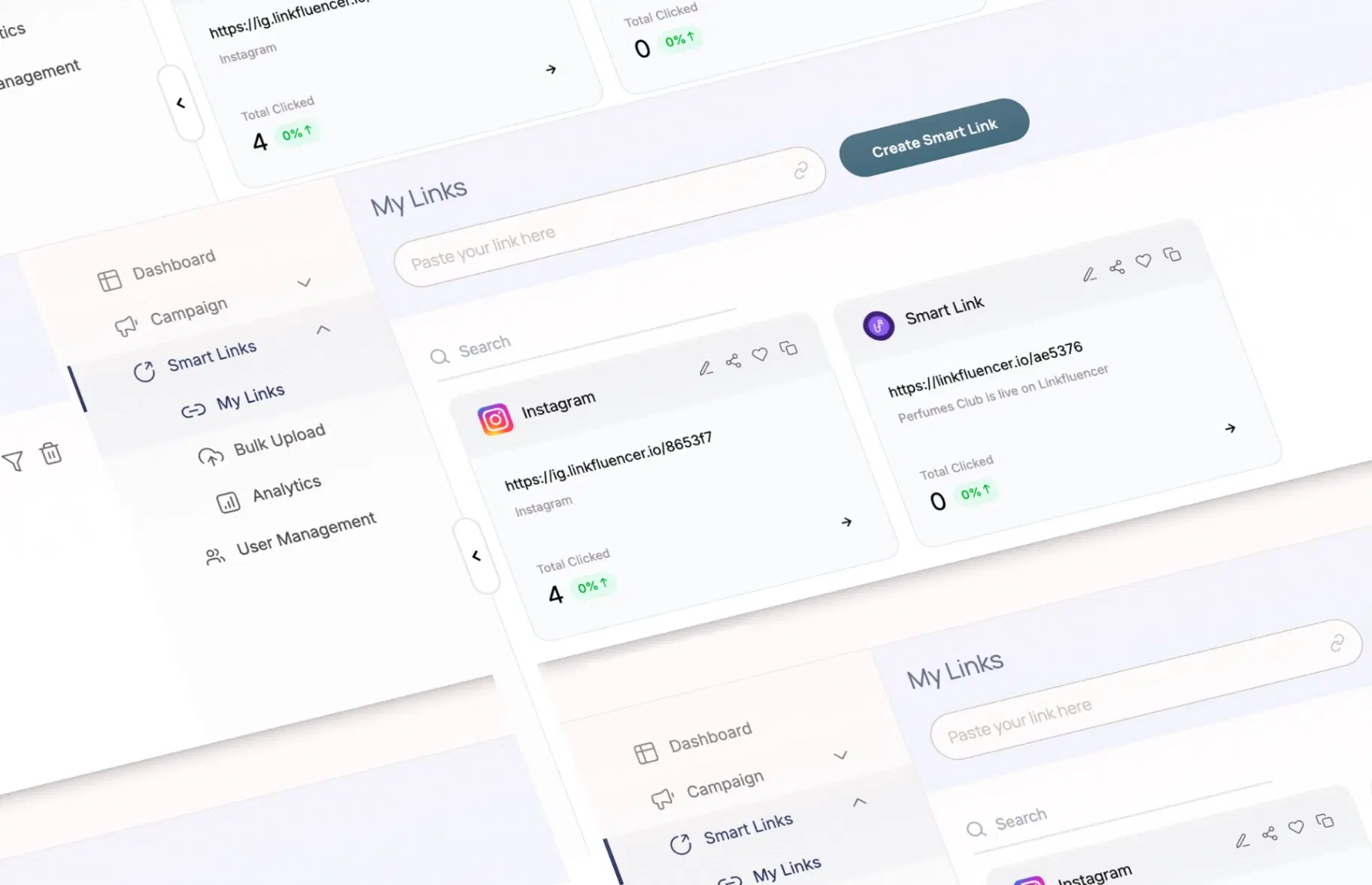
The smart link engine is the heart of the platform. TechEniac built a custom link resolution system in Node.js that performs multi-layer detection within 200ms of every click:
When a creator’s smart link is clicked, the engine evaluates all signals simultaneously and issues the optimal redirect native app deep link, mobile-optimised web view, or desktop browser experience.
Branded short domains (such as custom vanity URLs per creator) give creators professional, recognizable links while the engine handles the intelligence behind the scenes.
One of the hardest engineering challenges was maintaining a continuously updated app-schema registry mapping the latest deep-link URL schemes for 30+ major apps. App updates frequently change URI schemes, and the system needed to handle version-specific routing with graceful fallback to mobile web when the app is not installed on a user’s device.
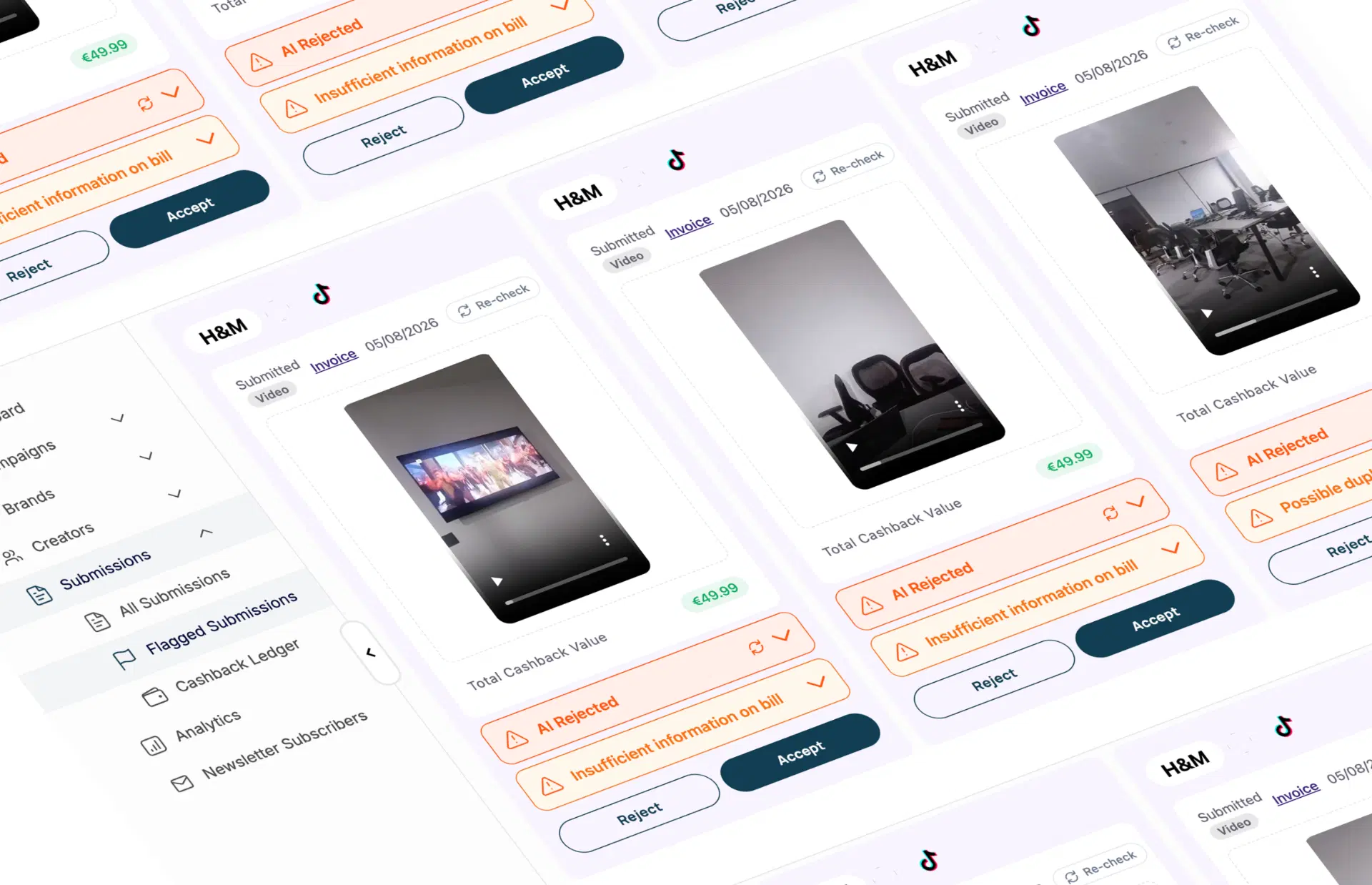
TechEniac built a content verification pipeline using Gemini Vision models that automates what previously took brands days of manual auditing:
Early testing revealed an 18% false positive rate in logo detection the model was flagging similar-looking graphics as brand logos. TechEniac implemented a two-stage verification approach: broad logo detection in the first pass, followed by a brand-specific classifier in the second pass. This reduced the false positive rate from 18% to under 3%, making the verification pipeline production-reliable.
With pre-launch marketing already driving traffic, the platform needed to be production-ready from Day 1. TechEniac designed the infrastructure for scale from the start:
The architecture maintained 99.9% uptime across all traffic spikes during the critical first 6 months post-launch.
Under the Hood
Mobile apps frequently update their deep-link URI schemes, meaning yesterday’s redirect logic can break today. TechEniac built a continuously updated app-schema registry mapping URL schemes for 30+ major apps, with intelligent fallback to mobile web when the target app is not installed. This registry requires ongoing maintenance and version-specific logic a non-trivial engineering commitment.
The initial AI content verification pipeline had an 18% false positive rate too high for production use where brands depend on accurate compliance reporting. TechEniac implemented a two-stage verification architecture: broad logo detection followed by a brand-specific classifier. This brought the false positive rate down to under 3%, making automated verification production-reliable and eliminating the need for manual brand audits.
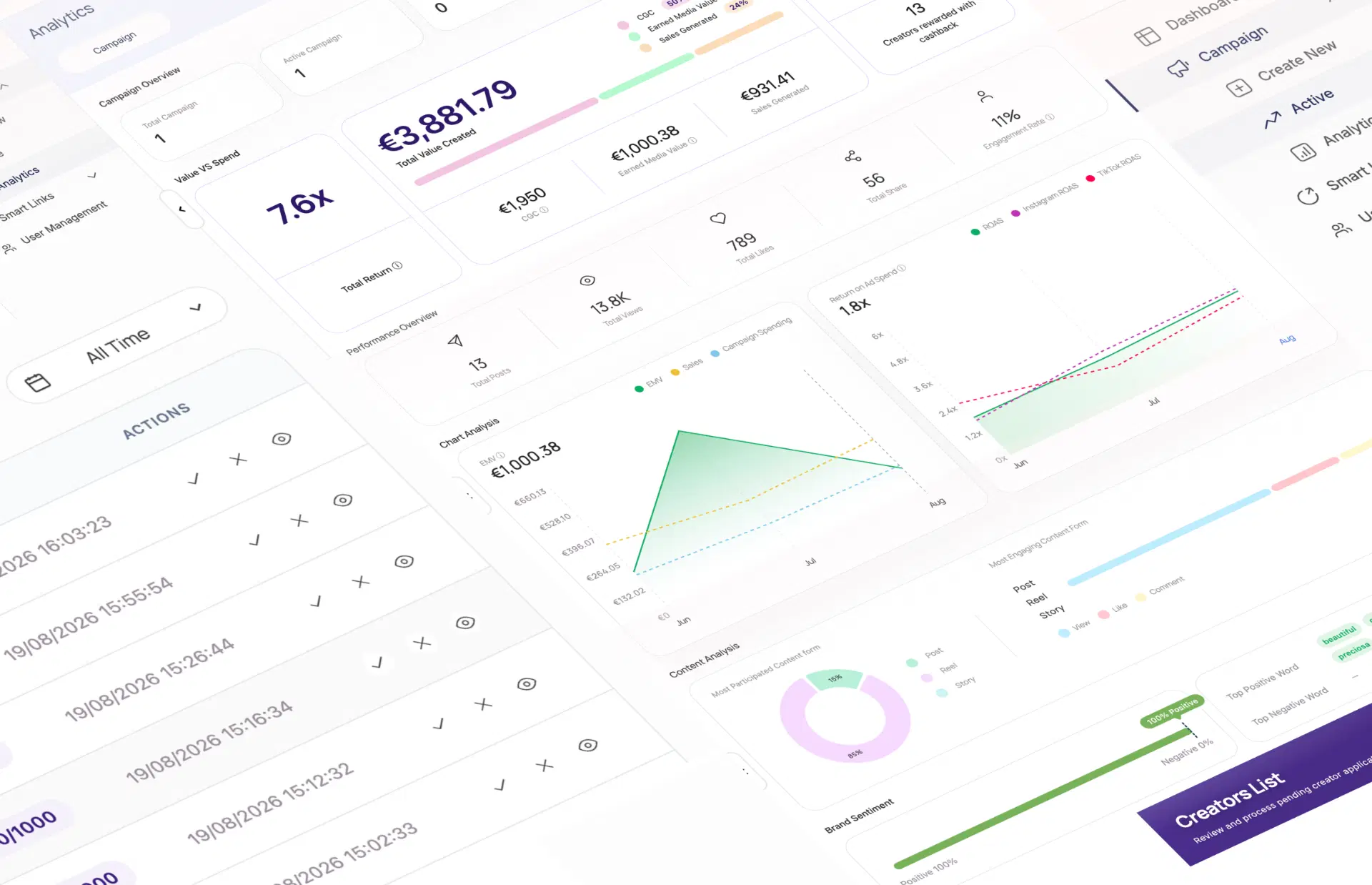
Brands needed to upload campaign data for thousands of creators simultaneously. Initial synchronous processing caused timeouts on large files. TechEniac moved processing to an async background queue using Bull with progress webhooks and email notifications, handling 10,000-row uploads without timeout issues. Campaign setup time dropped from 4 hours to 5 minutes a 97% reduction.
Measurable Results
in the first year
through smart link routing vs. standard links
from 4 hours to 5 minutes
globally via CloudFront CDN
on AWS Kubernetes (EKS)
vs. days with AI-powered brand compliance
Technology Stack
| Layer | Technologies |
|---|---|
| Frontend | React.js, React Native, Next.js, TypeScript, Tailwind CSS |
| Backend | Node.js, Express.js, MongoDB, Bull Job Queues, Redis |
| AI / ML | Gemini Vision API, Custom ML Classifier for Device/Platform Detection |
| Cloud & DevOps | AWS EKS (Kubernetes), AWS Kinesis (Event Streaming), CloudFront CDN, S3, GitHub Actions CI/CD |
| Database | MongoDB Atlas (Replica Sets), Redis (Session Caching & Rate Limiting) |
What the Founder Valued Most
When the founder approached TechEniac, the original feature set was overcomplicated multiple secondary workflows and nice-to-have integrations were bundled into V1 scope. TechEniac pushed back.
The team simplified the requirements to focus on the smart link engine the core value proposition that would drive creator adoption. Everything else was documented, prioritised, and deferred to post-launch iterations.
This product thinking knowing what NOT to build was as valuable as the technical execution. The result: 10,000+ creators onboarded within the first year, validating the simplified approach entirely.
Book a Free Consultation with TechEniac. We’ll review your product idea, discuss architecture options, and map a realistic path from idea to launch.